
Every organization says it values leadership. Mission statements are full of words like “empowering,” “developing,” and “people-first.” But here’s a question worth sitting with: how do you actually know if your managers are leading well?
Performance reviews tell you whether targets were hit. Engagement surveys tell you whether people are satisfied. But neither tells you whether the person responsible for a team’s day-to-day experience, manager, is building trust, growing talent, or creating the conditions for people to do their best work.
That’s the gap manager effectiveness surveys are designed to close. And yet, most organizations either skip them entirely or treat them as a formality. This piece is an invitation to rethink that — to ask harder questions about how your organization identifies, develops, and supports its leaders, and then to walk through exactly how to put a better system in place.
Think about your highest-performing individual contributor who just got promoted to a management role. They were brilliant at execution. But are they brilliant at coaching? At giving feedback that actually changes behavior? At creating psychological safety in a room?
Manager effectiveness surveys aren’t just about evaluating current managers. They’re one of the most powerful — and most underused — tools for identifying your next generation of leaders.
Consider this: when you ask a team how their manager handles conflict, communicates priorities, or supports professional growth, you’re not just getting a report card. You’re getting a leadership signal. You’re learning who naturally elevates the people around them — and who, despite good intentions, might be holding a team back.
The question isn’t whether leadership matters. It’s whether your organization has a system for seeing it clearly.
It’s easy to treat manager effectiveness as a once-a-year ritual. But the scenarios where this feedback becomes critical are far more frequent.
The new manager transition. Someone steps into a leadership role for the first time. They’re eager, probably anxious, and almost certainly replicating whatever management style they experienced — good or bad. Without structured feedback in the first 90 to 180 days, bad habits calcify.
The reorganization. Teams are restructured. Reporting lines change. A manager who thrived with a team of five senior engineers may struggle with a blended team of twelve across multiple time zones. The context changed, but did anyone check whether the leadership approach changed with it?
The retention crisis no one can explain. A team is losing people. Exit interviews point to “better opportunities elsewhere.” But is that the whole story? Often, the pattern underneath is a manager who isn’t providing growth, recognition, or clarity.
The high-performer plateau. A team consistently hits targets but never exceeds them. Innovation is low. People seem fine but not energized.
The M&A integration. Two companies merge. Each has different management cultures, expectations, and norms.
Manager effectiveness surveys carry more organizational baggage than almost any other people practice. Some of the most persistent myths deserve to be named directly.
“We already do engagement surveys — isn’t that enough?” Engagement surveys measure the temperature of the room. Manager effectiveness surveys examine the thermostat.
“Managers will feel attacked.” This fear is understandable — and it’s exactly why design matters so much.
“Employees won’t be honest.” They won’t be — if they don’t trust the process. And trust is earned through demonstrated action, not through a banner on the survey that says “your responses are confidential.”
“This is just an HR checkbox.” In too many organizations, that’s exactly what it is. The survey goes out because it’s on the annual calendar.
“We’re too small / too early / too busy for this.” If you have managers, you need feedback on how they’re managing. Size and stage change the implementation — not the principle.
Theory is important. But at some point, you need to build the system. Here’s how to implement a manager effectiveness survey program in Workday using OnSurvey.
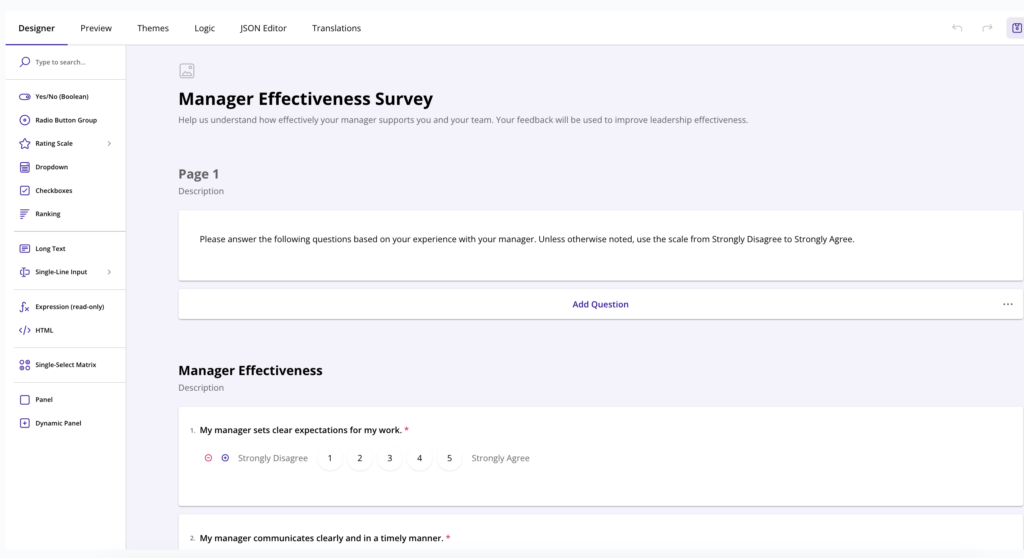
The quality of your insights depends entirely on the quality of your questions. OnSurvey’s survey designer lets you build instruments that balance structure with openness.
Designing questions that request specific feedback:
Start with behavioral, situation-specific questions rather than abstract ratings. For example:
Including open-ended questions to capture broader experience:
Structured questions show you patterns. Open-ended questions show you stories. Include two to three open-response prompts:
The combination of specific and open-ended questions gives you both measurable data and the qualitative context to understand it.
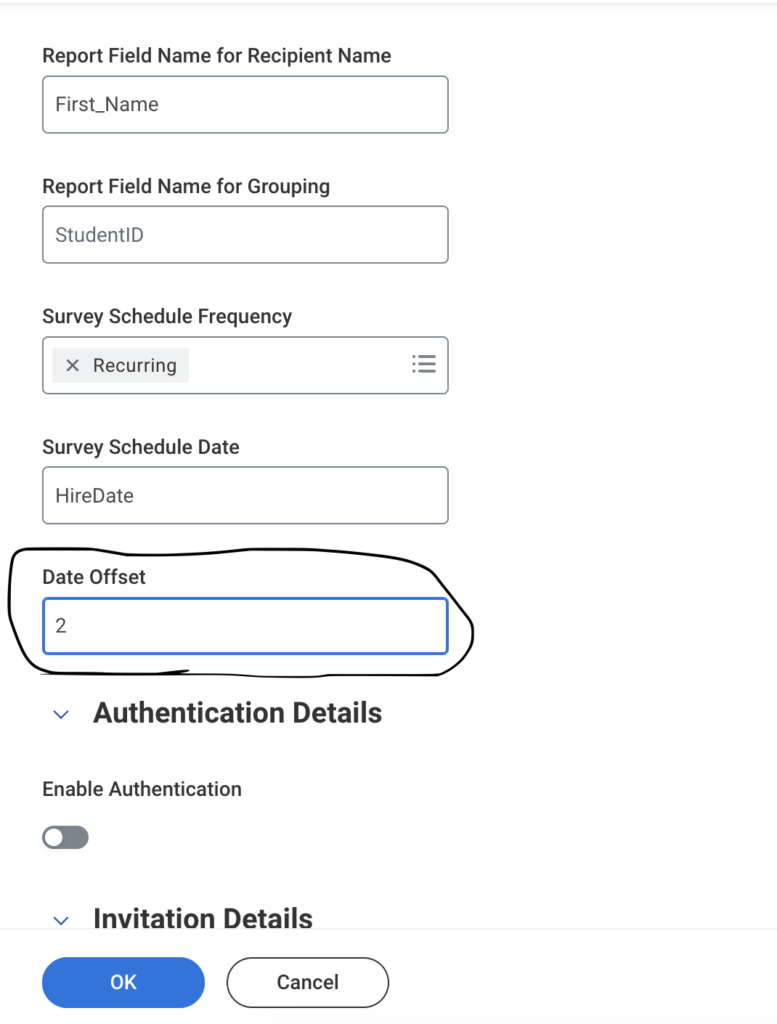
A survey that arrives at the wrong time gets ignored — or worse, gets resentful compliance. OnSurvey lets you define trigger conditions so surveys are sent when they’re most relevant.
Event-based triggers:
Calendar-based cadence:
Conditional logic:
The key is matching the survey to the moment.
Once your survey is live, OnSurvey provides real-time visibility into response rates and completion status — directly within Workday.
What to monitor:
Response rate benchmarks:
Aim for 70% or higher for meaningful data. Below 50%, the results may not be representative enough to act on with confidence. If response rates are low, that’s data in itself — it may signal survey fatigue, lack of trust, or poor communication about the survey’s purpose.
Nudging without nagging:
OnSurvey supports automated reminders that you can customize in tone and timing. A gentle reminder at the halfway mark and a final nudge before close is usually sufficient. Resist the urge to send daily reminders — it undermines the voluntary nature of the process.
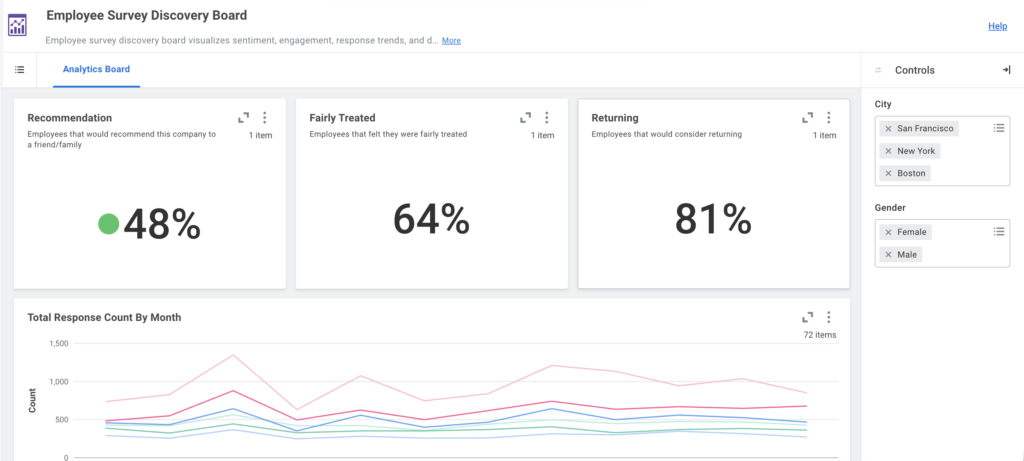
This is where trust is either built or broken. How you share results determines whether the next survey will get honest responses or safe ones.
Anonymity and aggregation:
OnSurvey enforces configurable anonymity thresholds. If a manager’s team has fewer than the minimum respondent threshold (typically five), individual results are suppressed and rolled up to the next level. Open-ended responses are presented without identifying metadata.
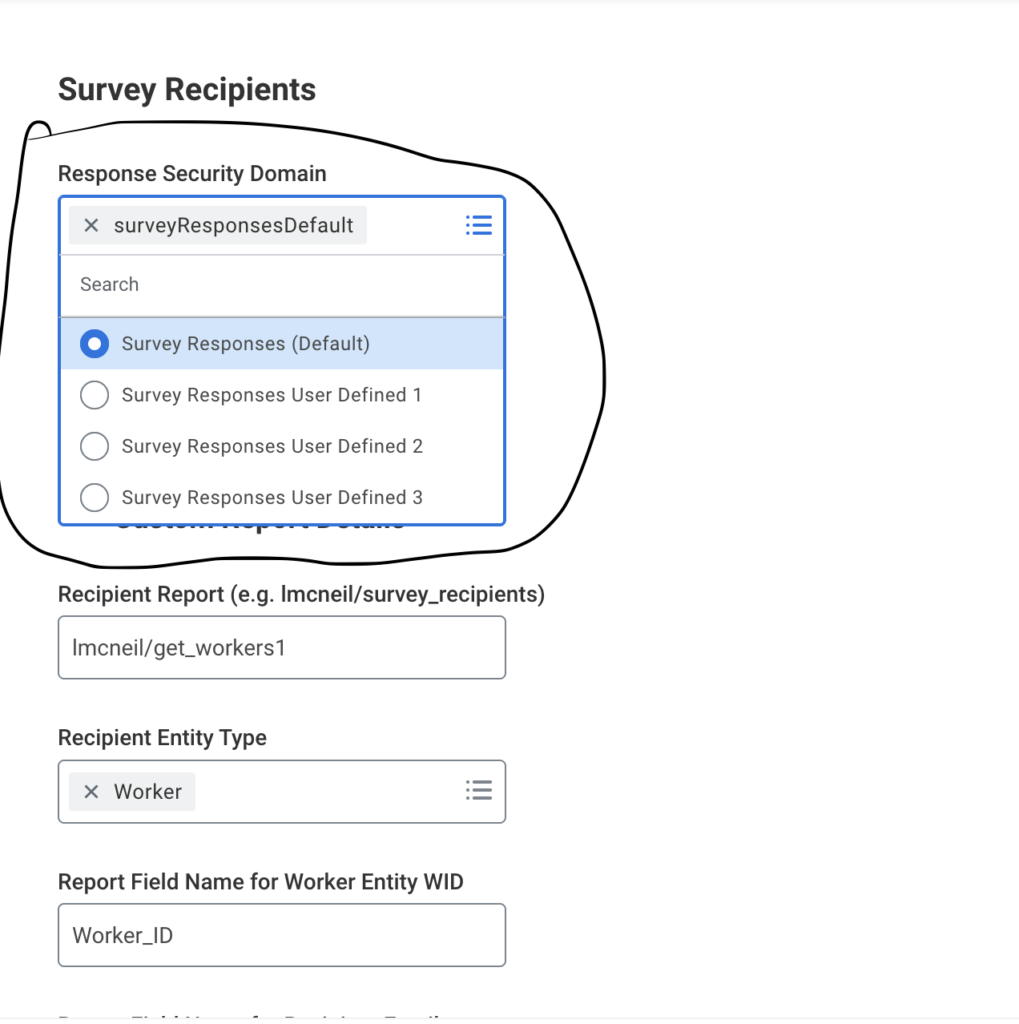
Who sees what:
Manager effectiveness surveys aren’t really about surveys. They’re about whether your organization is willing to ask honest questions about leadership — and then do something with the answers.
The companies that get this right don’t just have better managers. They have stronger cultures, lower attrition, faster leadership pipelines, and teams that genuinely want to do great work. The companies that don’t get it right — or don’t try at all — keep wondering why their engagement scores are flat and their best people keep leaving.
So here’s the question: what would change in your organization if every manager received thoughtful, specific, actionable feedback — and was supported in acting on it?
If you’re ready to find out, OnSurvey makes it possible — natively in Workday, designed for trust, and built for organizations that take leadership seriously.
[Try OnSurvey →] Start your pilot and see how manager effectiveness feedback can transform your leadership culture.